
Article: A Thread of Leather: From a 1843 Tannery to the CARESTA Atelier
A Thread of Leather: From a 1843 Tannery to the CARESTA Atelier
The CARESTA story begins with the taking over of this legacy.
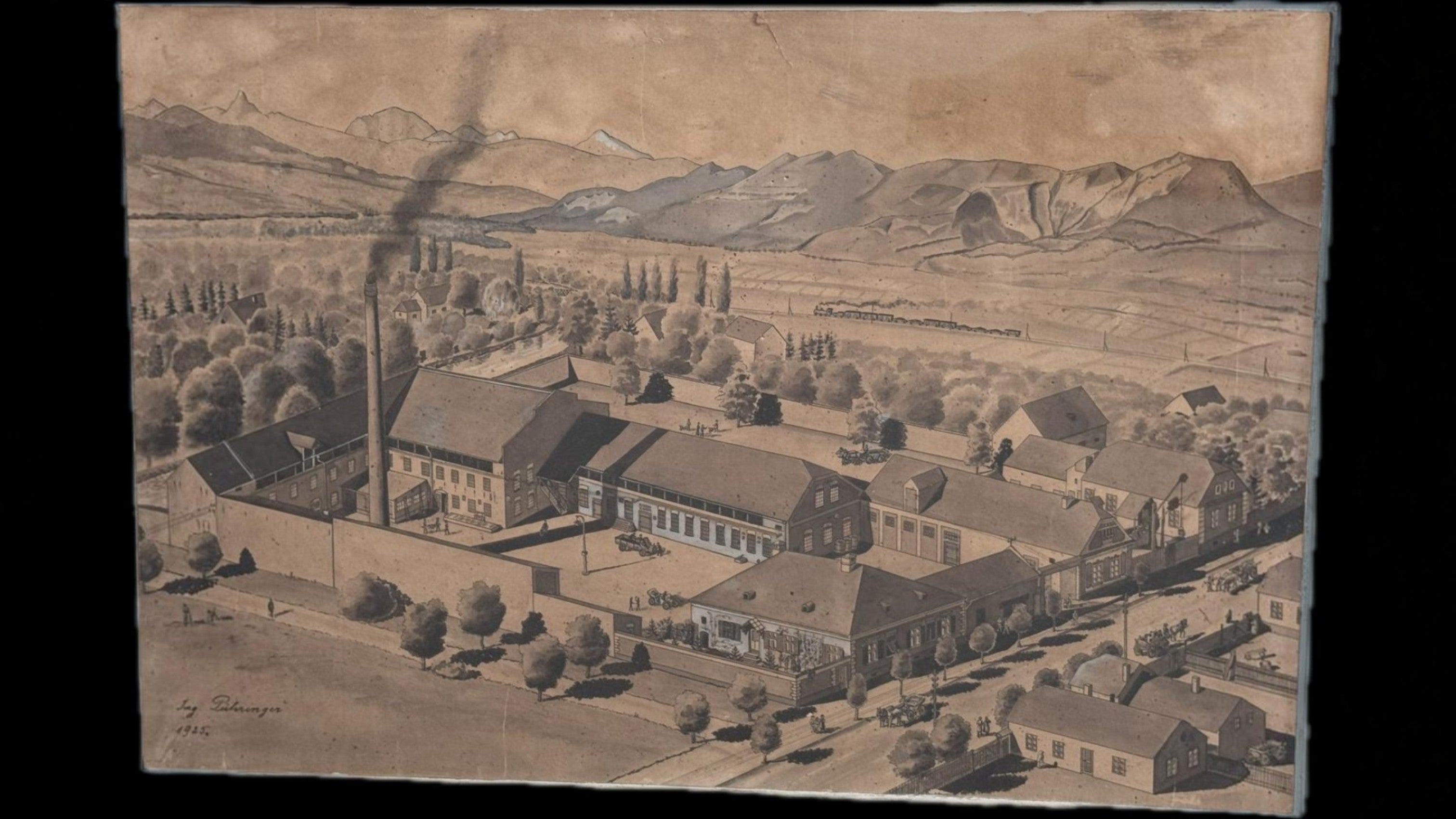
In 1843, in a Saxon workshop in the Transylvanian city of Sebeș, where a tannery bearing the name Dahinten opened its doors for the first time.
A town that knew leather
Leather was not new to Sebeș even then. As far back as 1396, the town counted six distinct guilds devoted to working hides: tanners, leatherworkers, cobblers, furriers, skinners, and beltmakers. For a small Transylvanian town, this was an extraordinary concentration of knowledge — generations of hands that understood what a hide wants, how it resists, and how it is persuaded to become something lasting.
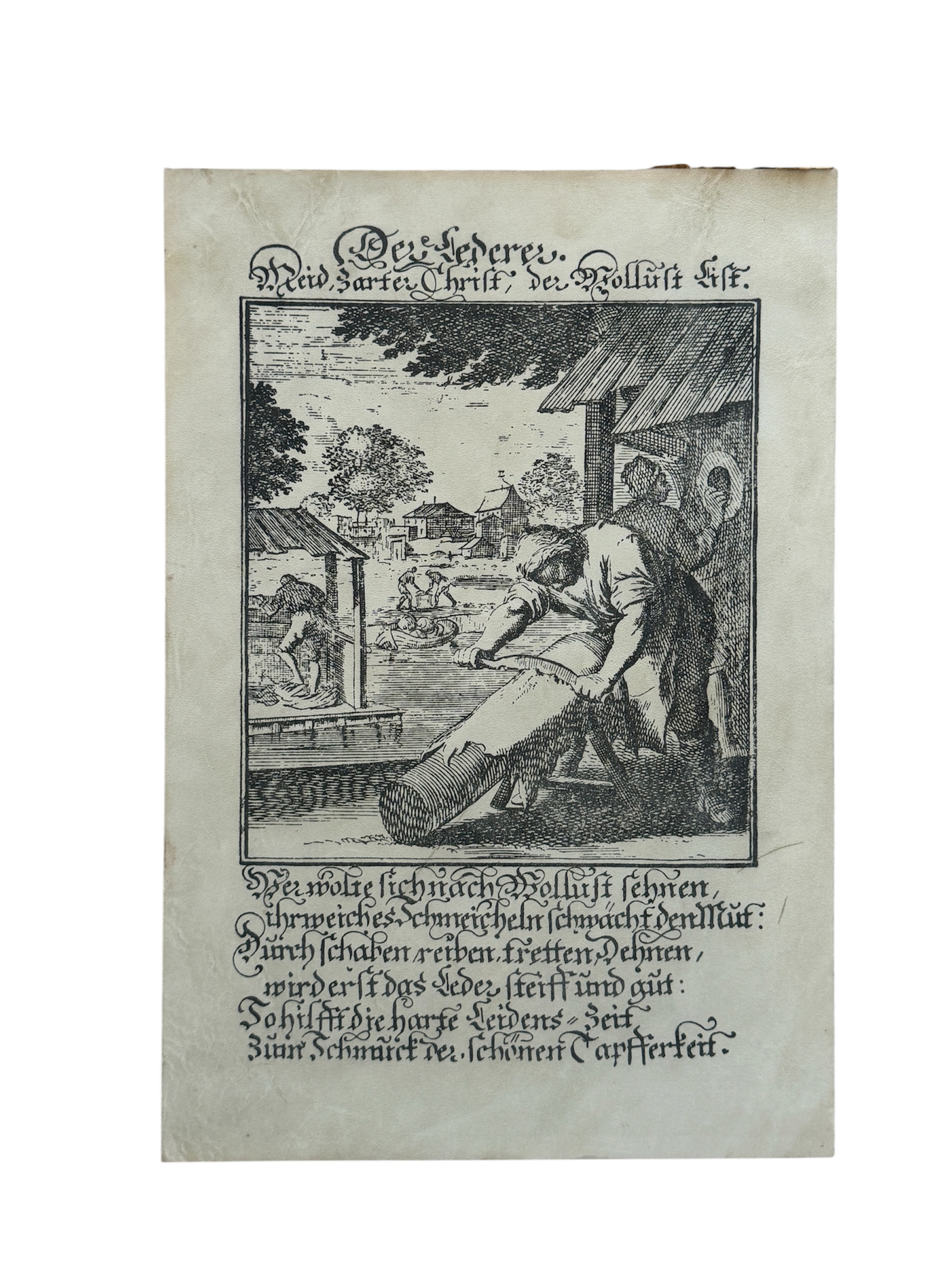
The old craft was never gentle. A seventeenth-century engraving of Der Lederer — the tanner — shows men bent over their work, dragging hides across a beam, surrounded by the water and toil of the trade. A verse beneath it, later copied out by hand in Romanian under the title Pielarul, says that only through scraping, rubbing, treading and stretching does leather become firm and good. It was written as a moral lesson, but it captures a literal truth we still live by: leather earns its strength through patience and pressure. Nothing beautiful in this material comes quickly.
The rise of a factory
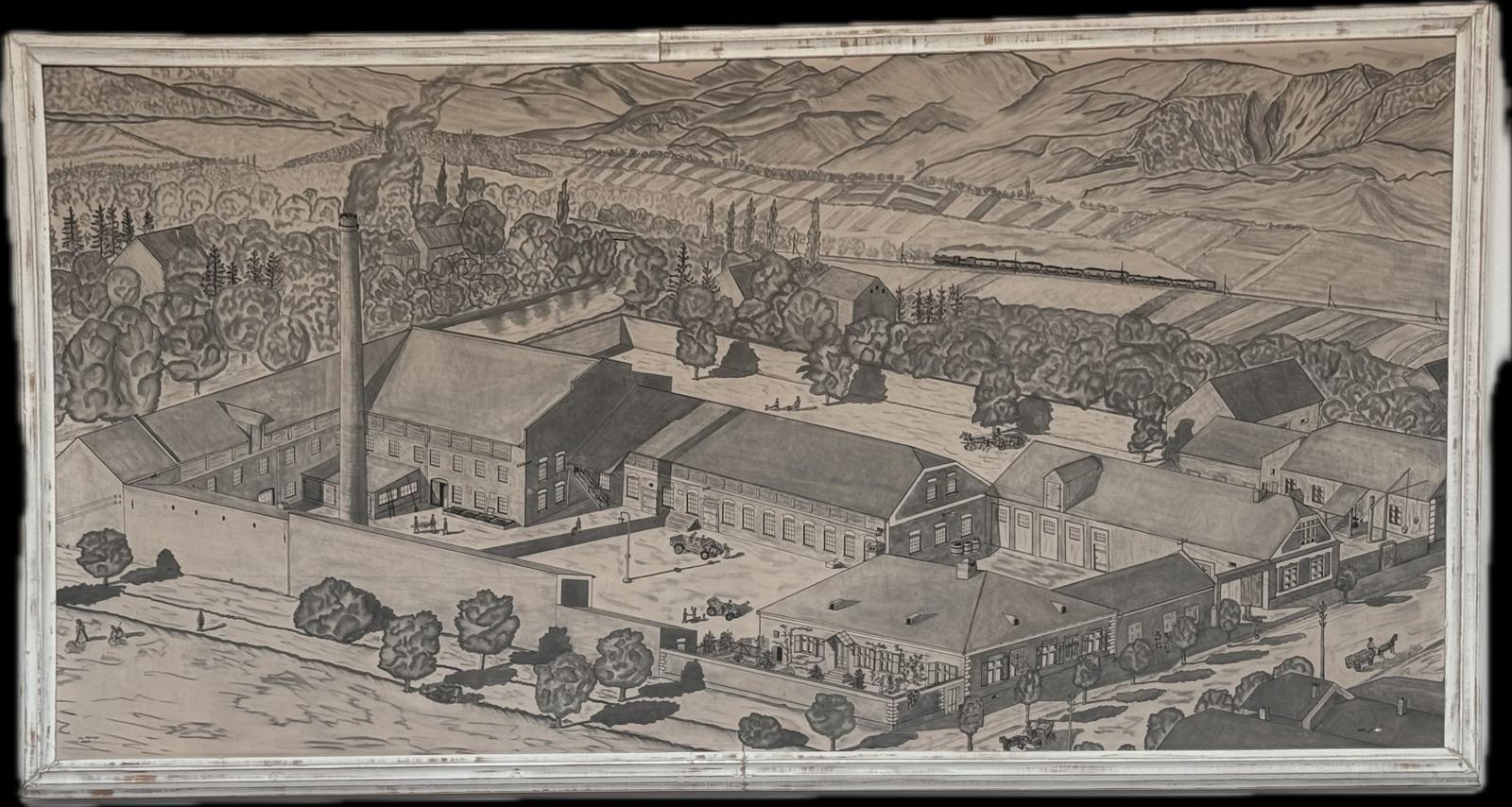
The workshop founded in 1843 grew. Under the stewardship of Karl Dahinten, and alongside the earlier tannery of Johann Gloser, the business modernised steadily through the turn of the century — a period when Sebeș itself was being transformed by its forward-looking mayor, Johann Schöpp. By the years of the First World War, when demand for footwear surged, the tannery had become a true enterprise employing some seventy workers.
What followed is the kind of detail that makes a place legendary. It was here, in Sebeș, that Romania's first "Maraton" sports boots were made. It was here that a new football was launched — quite literally — when Vasile Pala, who owned the factory between 1945 and 1948, dropped the first thick brown leather ball from an aeroplane directly onto the pitch before a match of the local "Șurianu" team. In those years, footballs for the entire country were made nowhere else but Sebeș.
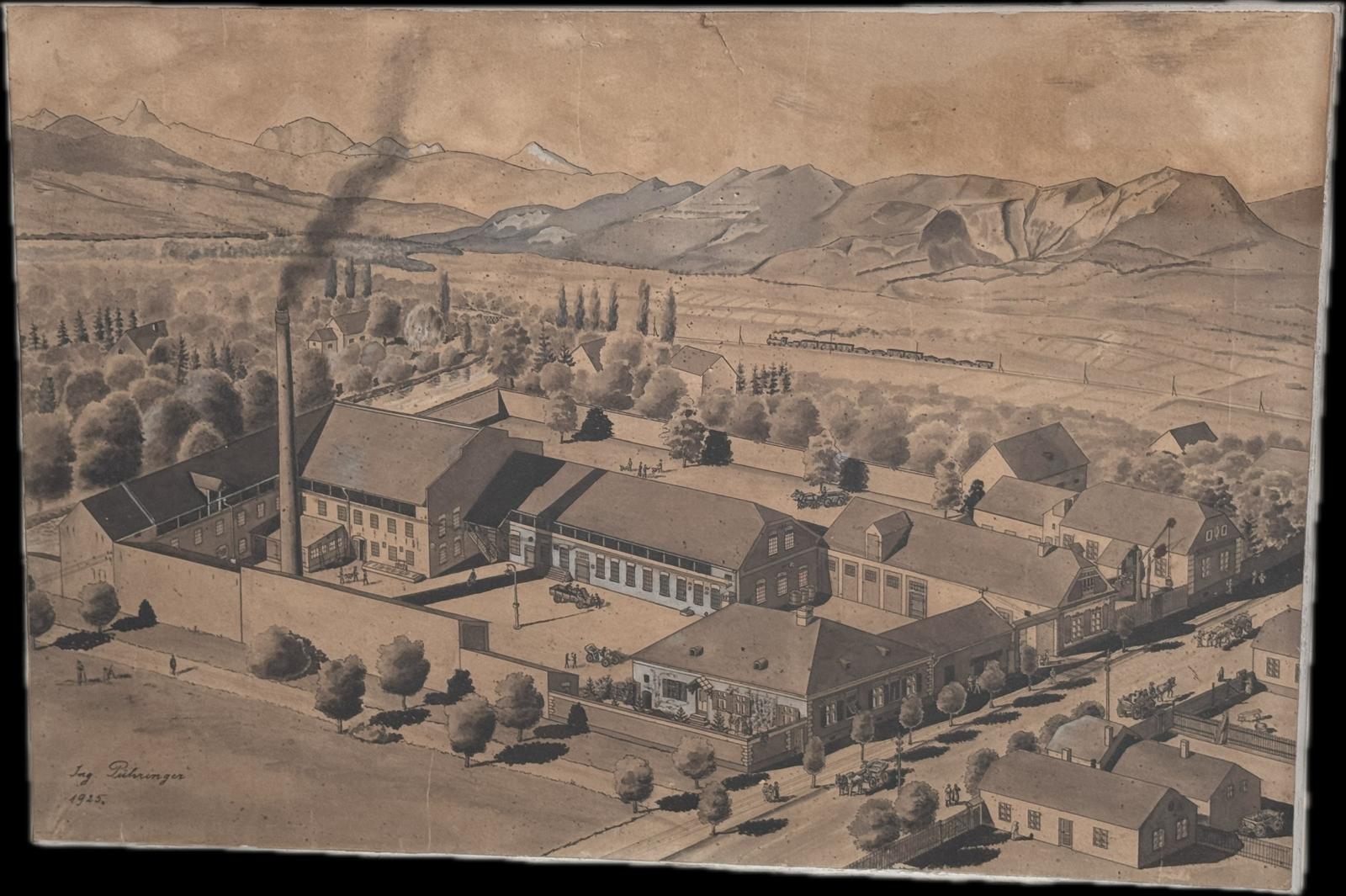
Under the name Căprioara, the factory carried its 1843 founding date as a badge of pride well into the modern era. It was, for a long time, the beating heart of leather in this part of Transylvania.

An inheritance nearly lost
History, however, rarely runs in a straight line. After 1990, the Căprioara factory was divided into two companies, Capris and Confexpeli. Both were privatised; both, in time, ceased their work in the trade. When Capris entered bankruptcy in 2012, a 169-year-old thread of craft was on the verge of being cut entirely.
This is the moment CARESTA chose to act. We took over the factory — not as a property transaction, but as an act of preservation. The historic building in the centre of Sebeș, rather than being left to ruin like so many emblematic factories of the region, was carefully restored and transformed into a residential complex of genuine architectural value, keeping the spirit of the place alive.
It mattered to us that the first tannery in Transylvania did not end as a ruin. Through CARESTA, the meaning of that place continues — in a new, contemporary form.
A new home in Alba Iulia
The leatherwork itself, meanwhile, needed a home built for the future. We relocated production to Alba Iulia — the city of Romania's Great Union — into a modern facility designed to meet the highest European standards.
Our factory there, designed by the architect Sorin Magda, is more than a place of production; it is a statement of design and intent. Natural light, clean lines, and natural materials work together to support an innovative production flow, calibrated to the most demanding standards of the luxury industry. It is a space, quite simply, where architecture inspires the work.

Carrying the craft forward
CARESTA Bags today practises the fine art of leather goods at the highest level, working with some of the largest fashion houses in the world. Our own brand, CARESTA, is built on the same principles: premium materials, precision in execution, and a deep respect for authentic craft.
But a tradition only survives if it is taught. This is why one of the defining elements of our work is our own school of leatherwork — a training centre where the next generation of artisans is formed to the highest standards. We do not only make objects; we invest in people, in the passing-on of knowledge, and in the continuity of a tradition that began in 1843.
Choosing Alba Iulia as our home reflects a deep confidence in this place and its people — a region rich in skill, capable of sustaining innovation, sustainability and excellence. We are building, at the same time, real opportunity and a community devoted to authentic luxury.
Why this matters to the bag you carry
CARESTA is, in the end, about balance and authenticity. It is about the woman who should not have to choose between reason and feeling, between rigour and dream. It is about all those who choose to be whole — who do not need an established logo to feel worthy, but choose instead authenticity, quality, and the story of a brand that is genuinely personal.
When you carry a CARESTA, you carry more than leather. You carry a thread that runs from a 1843 Saxon tannery, through a town that made footballs for a nation, through a near-ending and a deliberate rescue, to a hand in Alba Iulia that cut and stitched your bag. Elegance, after all, is a matter of attitude — and so is remembering where beautiful things come from.
— The CARESTA Atelier, Alba Iulia